
Search for flooring recommendations online and most of what comes back was written with a different home in mind. The content assumes climate-controlled interiors with stable humidity year-round, households without agricultural work boots or working dogs, and substrates that are wood-framed and consistent from room to room. That describes a lot of homes in Seattle or Atlanta. It describes fewer homes in Burley, Rupert, or Twin Falls. Element Restoration installs and replaces flooring across the Magic Valley and a 100-mile radius from Burley, and the products that hold up here are not always the ones that top the recommendation lists written for national audiences.
South-central Idaho homes deal with a specific set of conditions: concrete slab construction is common across the region, particularly in homes built from the 1970s through the 1990s; the high desert climate produces low ambient humidity in summer and temperature swings between seasons that stress dimensional materials; and the lifestyle of a working agricultural community means entry zones, mudrooms, and main living areas take real punishment from boots, equipment, and animals. The flooring that lasts in this environment is determined by those variables, not by what photographs well in a showroom.
Starting With the Substrate: Why Slab Construction Changes Every Recommendation
A significant portion of the homes across Cassia County and the surrounding communities are built on concrete slab. This matters more than any other single factor when choosing flooring, because it rules out or seriously complicates several of the most popular product categories.
Solid hardwood flooring cannot be glued or nailed directly to concrete. The moisture vapor that migrates through a concrete slab, even in a dry climate like south-central Idaho’s, is enough to cause solid wood to cup, crack, and delaminate over time. Homeowners who install solid hardwood on slab and then see it fail within three to five years are not dealing with a product defect. They are dealing with a material that was never suited to their substrate.
Engineered hardwood handles slab installation better than solid because its cross-ply construction resists the dimensional movement that moisture vapor causes in solid wood. A quality engineered product installed with a proper moisture barrier over a slab in Burley or Twin Falls can perform well for 15 to 25 years, depending on the wear layer thickness and the finish quality. Thicker wear layers, 3mm and above, allow for one to two refinishing cycles over the product’s life. Thinner wear layers look and feel similar in a showroom but do not offer that option.
Luxury Vinyl Plank: The Right Fit for Most Idaho Households, With Caveats
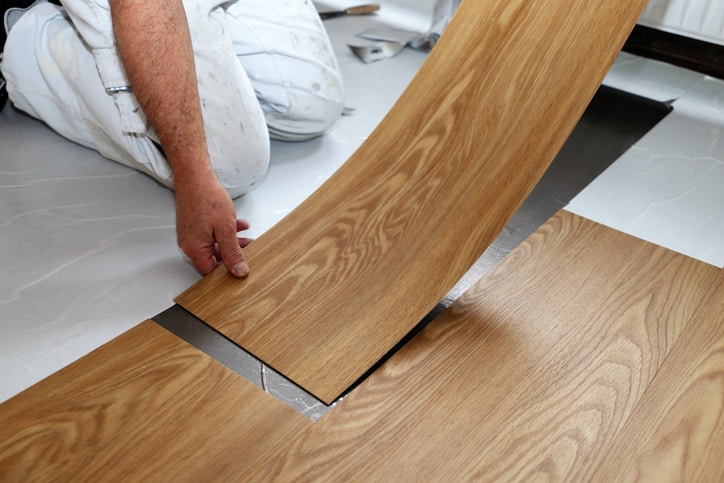
Luxury vinyl plank has become the most commonly installed flooring product in rural Idaho homes over the past decade, and in most cases that reflects a reasonable choice for the conditions. LVP is genuinely waterproof through its core, handles the temperature swings common in Idaho homes that may not be heated consistently in winter, installs directly over concrete without moisture barriers in most scenarios, and tolerates the kind of daily traffic that agricultural households generate.
Where LVP falls short in this climate has to do with temperature extremes specifically. The product category has a rated installation temperature range, typically between 55 and 85 degrees Fahrenheit, and an in-service temperature tolerance that varies by manufacturer and product line. In a rural Idaho home with an unheated addition, a shop-to-house transition area, or a room that regularly sees temperatures below 50 degrees in winter, cheaper LVP products can become brittle and fail at the joints. The fix is specifying a product rated for wider temperature tolerances, not avoiding LVP altogether.
Wear layer thickness matters significantly in active households. The 6-mil wear layer products that show up at the low end of the price range are adequate for a bedroom in a lower-traffic home. They are not adequate for the main entry, kitchen, or any room that sees daily boot traffic, pet nails, or furniture movement. Residential installations in working households in the Magic Valley region benefit from 12-mil or 20-mil wear layers, which cost more per square foot but deliver meaningfully longer useful life in the areas where flooring actually takes abuse.
Tile: Where It Earns Its Reputation and Where It Creates Problems
Ceramic and porcelain tile is the most durable surface option available for wet areas and high-traffic zones in any Idaho home. A properly installed tile floor in a bathroom, mudroom, or kitchen can outlast the home itself if the substrate is solid and the grout is maintained. In south-central Idaho’s dry climate, tile does not face the freeze-thaw risk that it does in outdoor applications, making it a reliable long-term choice for interior floors on slab.
The failure mode for interior tile in this region is almost always installation-related rather than product-related. Tile installed over a slab that has not been properly assessed for levelness and crack activity will crack at the grout lines within two to three years as the slab flexes seasonally. Idaho soil conditions, particularly the expansive clay soils found in parts of the Snake River Plain, can cause slab movement significant enough to telegraph directly into a rigid tile installation. A contractor who does not probe the slab condition before setting tile is skipping the step that determines whether the installation lasts ten years or fails in three.
Larger format tiles, which have been popular in kitchen and main living area installations for the past several years, require a flatter substrate than smaller tiles. A slab with minor variation that would accommodate a 12×12 tile without issue may not be flat enough for a 24×24 installation without grinding or self-leveling compound. Knowing this before selecting the tile avoids the frustration of discovering mid-installation that the product chosen requires additional substrate work.
Where Carpet Still Makes Sense in Idaho Homes
Carpet has fallen out of favor in a lot of home improvement content, and in high-traffic, high-moisture areas that reputation is deserved. In bedrooms, family rooms, and any space in a south-central Idaho home where warmth underfoot matters and daily foot traffic is moderate, carpet remains a practical and economical choice. The low ambient humidity of the high desert means carpet in Idaho does not face the mold and allergen accumulation issues that make it a poor choice in humid climates.
The relevant specifications for carpet in rural Idaho households are face weight and fiber type. A face weight of 40 ounces or above holds up under regular use without matting down quickly in the traffic paths. Nylon fiber outperforms polyester for resilience in high-use rooms, though polyester has improved significantly and represents a reasonable choice for rooms with lighter use. Avoid light-colored carpet in entry-adjacent rooms in a home where outdoor work is part of daily life. The maintenance burden is simply not worth the aesthetic preference.
Laminate: The Idaho Climate Problem Most Showrooms Won’t Mention
Laminate flooring is widely available, attractively priced, and photographs well. It is also the product most likely to cause problems in south-central Idaho specifically, for a reason that does not come up in most sales conversations. Laminate is a wood-core product with a photographic layer and a wear layer on top. The wood core responds to humidity fluctuations by swelling and contracting. In a climate as dry as the Magic Valley’s, the swings between summer and winter ambient humidity, and between a heated interior and an unheated one, can cause laminate planks to gap at the joints, peak at seams, and develop the hollow-sounding spots that indicate the locking joints have been stressed past their tolerance.
Laminate also cannot be refinished, which means wear damage is permanent, and it is not waterproof through the core the way LVP is. A kitchen spill that sits for any length of time, or a pet water bowl that overflows, can swell the core and buckle the floor in a way that requires full replacement of the affected area. For the price difference between a mid-grade laminate and a mid-grade LVP in today’s market, the performance gap does not favor laminate in an Idaho household.
Flooring Sales and Installation Across Southern Idaho from Element Restoration
The right flooring for a home in Burley is not the same as the right flooring for a home in Portland or Phoenix, and the advice that works in those markets does not always translate to a slab-on-grade house in Cassia County where the temperature drops to ten degrees in January and a family of four comes in from outdoor work every day. Getting specific about substrate, climate, lifestyle, and budget before selecting a product avoids the frustration of replacing a floor that failed before it should have.
Element Restoration offers flooring sales and installation for homeowners across Burley, Twin Falls, Rupert, Heyburn, Jerome, Gooding, Paul, Minidoka, and the surrounding communities. The team works with homeowners to select products suited to their specific home conditions rather than defaulting to whatever is trending in national remodel content. Reach out through elementbuilding.net to discuss your project and get a quote based on what your floors actually need.