
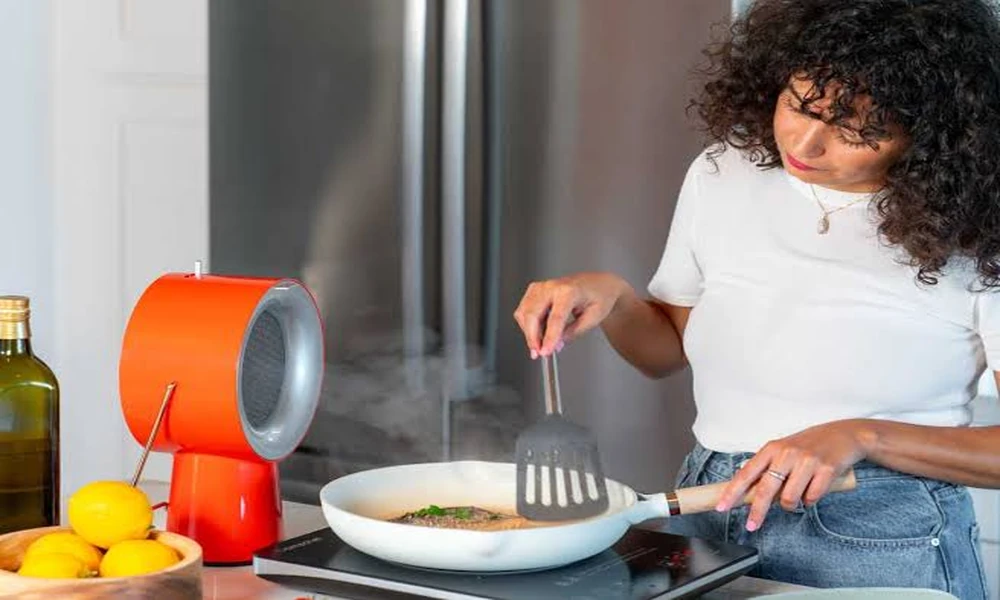
Kitchen ventilation has traditionally meant permanent installation – a fixed hood mounted above the hob, ducted through cabinetry and walls to an external outlet. But not every cooking situation is suited to permanent fixtures, and the growing category of portable range hood solutions addresses exactly this gap.
Who Needs a Portable Range Hood
A portable range hood is well suited to renters who cannot make permanent modifications to a property, apartment dwellers where installation access is limited, temporary kitchen setups in garages, outbuildings, or outdoor covered cooking areas, and households with a portable induction or electric hob that moves between locations.
How Portable Hoods Operate
Most portable range hoods operate on a recirculating principle, drawing cooking air through grease and carbon filters before returning cleaned air to the space. This avoids the need for any fixed duct connection and allows placement wherever it is most useful. Battery-powered and USB-rechargeable models extend the flexibility further, operating completely independently of a wall socket.
Performance Expectations
Portable hoods are designed for moderate cooking intensity. Everyday meal preparation – sauteing, boiling, light frying – is well within their capability. High-heat intensive cooking will push the limits of portable extraction, and in these situations, temporary supplementary ventilation through an open window remains advisable. Innovative brands like Ciarra Nosh Oven have developed portable ventilation products specifically designed to maximise performance within the practical constraints of a portable format.
Filter Maintenance
As with all recirculating extraction systems, filter maintenance is essential to sustained performance. Grease filters should be cleaned regularly, and carbon filters replaced according to the manufacturer’s schedule. Portable hoods with easily accessible filter housings simplify this process considerably.
Placement and Positioning
For effective capture, a portable hood should be positioned as close to the cooking surface as practical – ideally within 30 to 40 centimetres above the hob. Many portable models include flexible positioning arms or mounting options that allow fine adjustment to optimise the capture zone for different cooking configurations.