
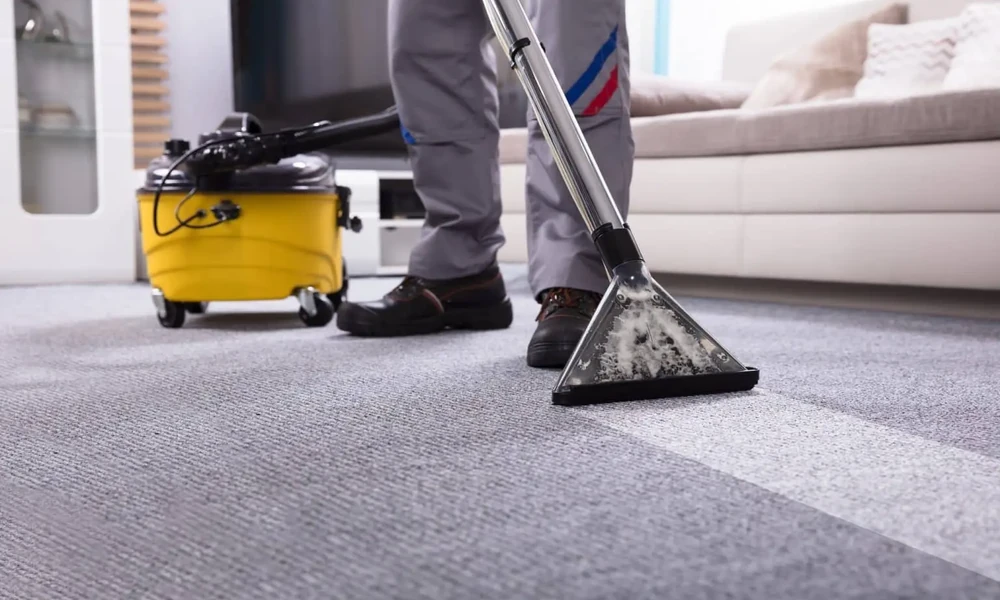
Carpet installed as part of an electrostatic discharge control program should not receive a generic cleaning proposal based only on appearance. Identify the actual floor product and involve the facility’s ESD lead. Maintenance needs to respect the manufacturer’s instructions and the site’s functional requirements. A clean-looking floor and permission to resume sensitive electronics work are different outcomes.
Identify the floor’s functional role
Consider an illustrative electronics workspace in Richmond Hill with identified ShadowFX static-control carpet and an ESD program. A standard cleaning proposal includes extraction followed by the cleaner’s usual protective finish, without identifying that product. The coordinator needs the ESD lead to review the proposed process before the floor receives a treatment selected only for appearance.
Start with the product record and the person responsible for the program. Do not identify an ESD carpet by colour, tile shape or the fact that computers sit above it. A similar-looking floor in the reception area may have a different specification. The work scope needs to identify which installed surface it actually covers.
Explain the planned use of the area. A visitor meeting room and a station handling sensitive components may sit close together without having identical operational requirements. The coordinator should obtain the facility’s real boundaries rather than decide that all carpeted space in the building belongs in one undifferentiated cleaning job.
Read the maintenance system for the actual product
StaticWorx’s published guidance for its ESD carpet provides a useful manufacturer example. It treats maintenance as a planned program, including soil prevention, dry-soil removal, spot care and hot-water extraction. Its accompanying explanation notes that dirt and residue can act as insulators and interfere with static dissipation. The maintenance purpose therefore extends beyond how the floor looks.
That example is specific to the manufacturer’s products and instructions. Obtain the current guidance for the carpet actually installed in this facility. A paragraph describing another ESD floor cannot approve a cleaning process for this one, even when both products serve a similar purpose.
Read the proposed method against that guidance with the facilities and ESD leads. They need to understand the process being offered, any products involved and who will carry it out. A proposal saying only “commercial carpet clean” may leave too much unstated for the responsible people to assess.
Do not turn the review into a household chemistry exercise. The coordinator should not invent a dilution, substitute an additive or assume that using water alone answers the functional concern. Have the relevant instructions and competent people settle the process rather than trying to reduce it to a familiar carpet-cleaning nickname.
Put the proposed extractor into the approved process
Before hiring a Richmond Hill extractor from Drying Equipment, the coordinator obtains the actual offered model from the supplier. Separately, the cleaner names the proposed finish. The ESD lead can now compare an identified machine and treatment with the floor’s requirements, instead of accepting two proposals that both say only commercial cleaning.
For this ShadowFX example, the manufacturer’s instructions prohibit silicone-based anti-soil treatments. Its guidance also explains the performance concern with dirt and residue. The ESD lead checks the named finish against the actual instructions and resolves any mismatch with the cleaner before acceptance. They do not infer approval from the carpet’s improved appearance.
Clarify which party supplies each part of the arrangement. The rental provider supplies equipment under its confirmed offer; the facility controls its ESD program; the competent operator follows the applicable method. If a responsibility is missing between those roles, resolve it before accepting a job described only by its expected appearance.
Keep equipment instructions within their proper scope. They explain the supplied machine, while the floor documentation and facility program address other requirements. Do not expect a machine demonstration to approve the complete workplace process, and do not use the carpet maker’s maintenance example as a substitute for the rental’s own operating guidance.
The room’s release needs its own accountable decision
Ask the ESD lead what the site requires before the affected work area returns to its normal use. If the program calls for verification, identify who performs it and who accepts the result. Keep the applicable requirement attached to this facility’s program, with the responsible person deciding what the actual result permits.
The person checking the visual result may have a different role. They can report whether the agreed visible soil has been addressed without certifying electrical performance. Keep those statements distinguishable so a photograph of a tidy room does not become the sole basis for returning sensitive work to the area.
Plan the work schedule around the applicable release requirements. A promise to finish cleaning by a certain time should not be interpreted as permission to restart every activity immediately afterward. Give the operations team an accurate account of what is complete and what still awaits the responsible person’s decision.
If an unexpected finding or process change arises, return it to the appropriate lead. Do not ask the cleaning operator to improvise a performance claim merely to meet the planned reopening. An honest unresolved status is more useful than a confident assurance that cannot be traced to the facility’s requirements.
Keep future housekeeping inside the same program
Retain the accepted maintenance scope where the next coordinator can find it. Include the installed product identity and the relevant program contact. The point is to preserve a workable basis for future care, rather than make each visible mark start another generic shopping exercise.
Tell staff who handles ordinary maintenance concerns and who handles possible ESD performance concerns. They should not respond to a dull-looking patch by applying a convenient treatment from another room. A small unreviewed change can undermine the careful process established for the larger cleaning task.
The finished floor should be described accurately: maintained through the approved method, with any required workplace release handled by the responsible lead. Its appearance can be satisfactory without being asked to prove everything else. That leaves the maintenance program serving the electronics work for which the floor was selected.