
Every effective fire safety program begins with an honest assessment of where the risks actually lie. This means identifying flammable materials, faulty wiring, overloaded circuits, and other potential ignition sources, then evaluating how each one could affect employees, visitors, and the property itself. A risk assessment is not a one-time exercise; it should be revisited regularly as a facility’s layout, equipment, and use change over time.
Beyond physical modifications, addressing these vulnerabilities often involves relying on specialized support to ensure round-the-clock protection. For instance, partnering with experienced professionals like The Fast Fire Watch Company allows facilities to maintain dedicated monitoring during system upgrades, equipment failures, or heightened risk periods. Incorporating trained personnel into your overall strategy ensures that potential ignition sources are immediately identified and managed, bridging critical gaps before a minor oversight escalates into a major emergency.
After identifying potential hazards, the focus should shift to practical steps that minimise their impact. This may include improving the storage of combustible materials, replacing outdated electrical wiring, or maintaining higher standards of housekeeping. To prevent the buildup of dust and clutter.
Maintain Core Protection Systems
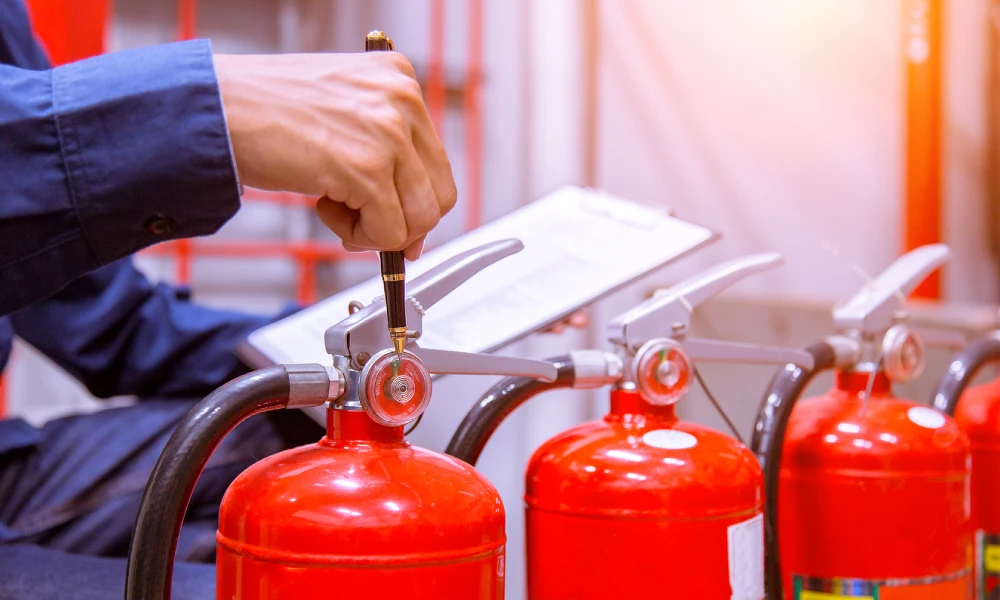
Fire alarms, sprinklers, and extinguishers form the backbone of any facility’s protection, and each requires its own maintenance rhythm. Alarms should be tested regularly to confirm audibility throughout the building, sprinkler components need periodic inspection for pressure and cleanliness, and extinguishers should undergo monthly visual checks along with an annual professional inspection. Exit routes deserve just as much attention: emergency lighting, illuminated exit signage, and unobstructed corridors all need to be verified consistently rather than assumed to be working.
Every one of these checks should be documented. Clear records not only demonstrate compliance during an audit but also help a facility track recurring issues before they become serious problems.
Train and Prepare the People Who Use the Building
Equipment alone cannot keep a facility safe if the people inside do not know how to use it. Staff should be trained to recognise and report hazards, understand evacuation routes, and know how to operate a fire extinguisher if the situation calls for it. Regular fire drills reinforce this training and help occupants respond calmly rather than in a panic when an actual alarm sounds.
A facility’s fire safety plan should also assign clear roles and responsibilities so that everyone, from frontline staff to management, understands exactly what is expected of them during an emergency.
Review and Adapt Over Time
A facility is rarely static. New equipment gets installed, layouts change, and staff turnover means that knowledge from an earlier training session can fade over time. Because of this, fire safety measures should be reviewed on a set schedule rather than left in place indefinitely, with checklists updated to reflect current conditions and lessons learned from previous inspections or near misses.
Involving employees in this review process, rather than treating fire safety as something dictated solely from management, often surfaces practical concerns that a purely top-down approach would miss, resulting in a stronger and more realistic safety program overall.
Final Thoughts
Fire safety is never the result of a single measure; it is the product of consistent risk assessment, well-maintained equipment, and a workforce that knows how to respond when something goes wrong. Facilities that treat these elements as an ongoing commitment rather than a periodic obligation are far better positioned to prevent fires and protect everyone inside their walls.