
For years, most garden fencing followed a fairly predictable formula.
Natural brown timber. Maybe a coat of traditional fence stain every few summers. Then leave it alone until it needed doing again.
That has changed.
Across Leeds and the rest of the UK, I’m seeing far more homeowners choose black, charcoal, deep grey and even dark green fencing. Some are buying darker composite systems from the start. Others are taking perfectly ordinary timber fencing and completely changing its appearance with paint or stain.
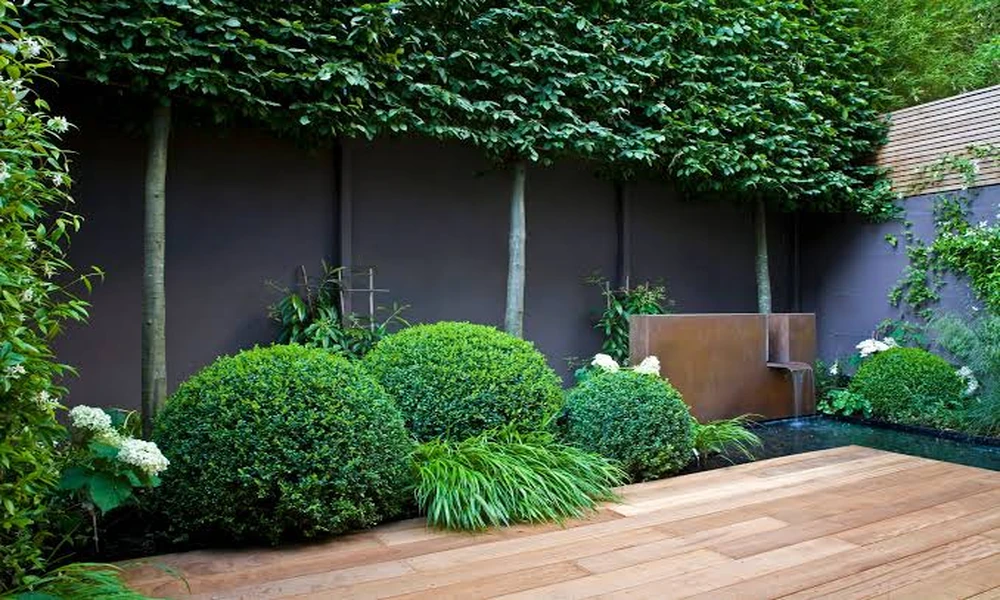
The attraction is easy to understand. Dark fencing can make planting stand out, disguise an ageing boundary and give even a fairly ordinary garden a more deliberate look.
But after decades working with garden fencing, I’d add one warning. A colour that looks fantastic on somebody else’s garden photograph won’t necessarily work in yours.
Before choosing new garden fencing in Leeds, it pays to think about the garden as a whole rather than choosing a colour in isolation.
Why Dark Fencing Has Become So Popular
Garden design has become much more confident.
People used to play things safe with boundaries. The fence was there to separate one property from another and nobody expected it to contribute much visually.
Now homeowners treat fencing as part of the design.
Charcoal fencing works particularly well behind green planting. Leaves look brighter against it. Pale flowers stand out. Even fairly simple grasses and shrubs suddenly have more definition.
Black can be even more dramatic.
I’ve seen relatively small Leeds gardens completely change once tired brown panels were painted almost black. The fence seemed to disappear behind the planting rather than dominate it.
That sounds backwards.
You’d assume a dark colour would make the boundary feel heavier.
Sometimes it does.
In the right garden, though, the opposite happens.
Dark Colours Can Make Boundaries Recede
This is one of the more interesting things about darker fencing.
Your eye doesn’t always focus on it.
A light or orange-toned timber fence can become one of the brightest surfaces in a garden. You notice every panel, every post and every change in level.
Paint the same boundary a deep charcoal and your attention often moves towards the plants instead.
That’s particularly useful in smaller gardens.
A long run of standard panels can make a narrow plot feel boxed in. Darkening the boundary and planting in front of it can soften that effect considerably.
I’ve seen this work very well behind ferns, grasses and evergreen shrubs.
It works less well when there’s nothing in front of the fence.
Then you’re basically looking at a large dark wall.
Context matters.
Black Isn’t Automatically Modern
This is where some garden makeovers go wrong.
People see black fencing and assume it will instantly make an old garden look contemporary.
Not necessarily.
Colour can’t rescue poor fencing.
If the panels are badly warped, posts are leaning and gravel boards run at different heights, painting everything black may actually make those faults more obvious.
Straight lines matter more with darker finishes.
The same applies to modern slatted fencing. Dark horizontal battens can look extremely sharp, but only when the installation is accurate.
One uneven post can throw the whole run visually out of line.
Before spending money on paint, I’d always sort the structure first.
Older Timber Needs Checking Before Painting
I’ve been asked several times whether painting an old fence will extend its life.
Maybe.
But don’t confuse appearance with condition.
A panel can look tired while remaining structurally sound. That’s a good candidate for cleaning and refinishing.
Rotten timber is different.
Paint doesn’t repair rot.
If you can push a screwdriver easily into the bottom of a rail or post, adding two coats of fashionable charcoal paint isn’t going to achieve much beyond making the rotten timber look smarter for a while.
Check the lower sections carefully.
Look behind climbing plants.
Inspect where rails meet posts.
Pay particular attention around ground level, where moisture tends to remain longest.
If significant movement has already started, speak to a fencing contractor before decorating anything.
You might save yourself a weekend with a paintbrush.
Dark Fencing Gets Hot
This isn’t discussed enough.
Dark surfaces absorb more heat.
On a sunny south-facing boundary, black fencing can become surprisingly hot during summer.
With properly seasoned and treated timber, this isn’t automatically a major issue. Timber already expands and contracts naturally as moisture and temperature change.
But repeated heating and cooling can expose weaknesses.
Thin boards may cup.
Small cracks can open.
Already warped timber can become worse.
I’ve seen featheredge boards move noticeably during very dry summers and then settle differently once wetter weather returns.
The colour isn’t solely responsible. Timber movement happens regardless.
A very dark finish on a sun-baked boundary simply adds another factor.
Preparation Matters More Than The Tin Of Paint
I’ve lost count of how many freshly painted fences I’ve seen peeling within a year.
Usually the paint gets blamed.
Quite often, preparation was the real problem.
Fencing needs to be reasonably dry before coating.
Painting damp timber traps moisture and prevents the finish bonding properly. Applying paint over algae, dirt or loose old stain causes similar problems.
Autumn can be awkward for this reason.
You might get a bright afternoon, but if the timber has spent the previous week soaking wet, the surface may not actually be ready.
Don’t rush it because the weather forecast shows three dry hours.
Let the fence dry properly.
Clean it.
Remove loose material.
Then apply the product according to its instructions.
Boring advice, perhaps.
It works.
Dark Green Deserves More Attention
Black and charcoal get most of the attention, but dark green is probably my favourite of the current fencing colours.
It works particularly well in established gardens.
Deep olive and forest tones blend naturally with planting while still looking more deliberate than untreated timber.
They also tend to feel less severe than pure black in traditional gardens.
Think about a Victorian terrace or a 1930s semi with mature planting.
Jet black fencing can work, but sometimes it looks slightly forced.
A deep muted green often sits more comfortably.
There isn’t a correct answer.
The architecture and planting should influence the choice.
Grey Fencing Can Be Surprisingly Difficult
Grey was everywhere for a while.
Grey windows. Grey kitchens. Grey paving. Grey garden furniture.
And, inevitably, grey fences.
Some of it has aged well.
Some hasn’t.
Cool grey fencing can make a garden feel flat if it’s surrounded by equally cool paving and limited planting.
I’ve visited properties where virtually every hard surface was grey.
The garden needed warmth desperately.
Natural timber would probably have looked better.
Warmer charcoal shades tend to be easier to live with because they provide contrast without making the whole garden feel cold.
Again, trends shouldn’t dictate the decision.
You’re going to look at the fence long after social media has moved onto something else.
Composite Gives A Different Kind Of Dark Finish
Dark composite fencing produces a much more uniform appearance than painted timber.
That’s exactly why some people like it.
No knots.
No inconsistent grain.
No boards absorbing stain differently.
For contemporary gardens, it can work extremely well.
The trade-off is price.
Composite fencing cost is generally higher than standard timber, particularly once posts, trims and installation are included.
It also behaves differently.
Composite materials expand and contract with temperature, so installers need to follow the correct spacing requirements. A dark composite board sitting in direct summer sun can experience significant temperature changes.
You can’t simply install it like timber and hope for the best.
I’ve seen expensive composite systems bow because somebody ignored expansion allowances.
Premium materials don’t compensate for poor installation.
Planting Makes Dark Fencing Work
If you’re considering a darker boundary, think about what will sit in front of it.
This is where the trend really earns its keep.
Fresh green foliage against charcoal looks excellent.
White flowers become brighter.
Ornamental grasses stand out clearly.
Even fairly ordinary shrubs can suddenly look more considered.
You don’t need complicated planting either.
In fact, simple often works better.
One mistake I’ve seen is homeowners painting the fence dark and then filling every available space with brightly coloured pots, furniture and ornaments.
The calm backdrop disappears beneath visual clutter.
Let the fence do less.
That’s usually when it looks best.
Maintenance Doesn’t Disappear
Dark fencing hides certain marks extremely well.
It shows others.
Dust, dried rain marks and bird mess can become more obvious on very dark smooth surfaces. Painted timber will eventually need another coat too.
How quickly depends on exposure, product quality and the condition of the original timber.
South-facing fencing generally takes more punishment from sunlight.
Shaded fencing deals with more persistent moisture and algae.
Neither side gets an easy life.
Check the fence each spring and autumn rather than waiting until it looks terrible.
Small areas are much easier to deal with early.
Don’t Paint Over A Fence Problem
This is the main thing I’d want homeowners to take away from the trend.
Colour comes last.
Before changing the appearance, check the structure.
Push the posts gently.
Check the rails.
Look for rot around the bottom.
Make sure gravel boards haven’t disappeared beneath raised soil levels.
Open and close the gate.
Look along the top of the fence and see whether the line remains straight.
If everything is sound, get the brushes out.
If it isn’t, deal with that first.
Homeowners searching for a fence company near me often assume an untidy fence needs complete replacement when some sections may simply need sensible repairs before refinishing.
Equally, I’ve seen people spend good money decorating fencing that should have been replaced.
Neither makes much sense.
Trends Work Best When You Don’t Follow Them Too Closely
I like the move towards darker fencing.
Used properly, it can completely change a garden without changing much else.
But I’d never choose black simply because black fencing happens to be fashionable.
Look at the house.
Look at the amount of sunlight.
Look at the paving.
Look at the planting.
Most importantly, look at the fence that’s already there.
Sometimes deep charcoal will make the garden feel sharper and greener.
Sometimes dark olive will sit naturally behind mature shrubs.
And sometimes the best decision is to leave good timber looking like timber.
After enough years working on gardens, you realise trends are useful for ideas.
They aren’t instructions.